
Designing a shipping calculator for hyperlocal and PAN India deliveries
Bikayi was an 🇮🇳 Indian e-commerce platform helping small and medium-sized businesses launch and grow online stores, with a valuation of approximately $45 million
What did I do?
- Secondary research
- User research
- Competitor analysis
- Final solutioning
- High fidelity UI
- Handoff
Problem statement
Getting shipping prices right is crucial for any e-commerce store
A significant amount of drop-offs happen at this stage in the checkout flow, so merchants need to charge a fair price that covers shipping costs without ripping customers off. For Bikayi merchants who provide PAN India as well as hyperlocal delivery, with separate delivery partners for each, it was harder to customise delivery prices
Strategize
Defining clear outcomes streamlining the shipping setup
-
01
Identify
Understanding the shortcomings and pain points in Bikayi's existing shipping model
-
02
Analyse
Analysing competitors' shipping models to understand how the same problems are currently being solved, and defining scope and constraints
-
03
Prioritize
Prioritising and adapting research findings to build a robust system that works seamlessly across all use cases
01 · Identify
Merchant conversations
-
Plant store · Hyperlocal
"We usually pick which service to use based on the nature of the order. Dunzo is accurate for most of our smaller orders, while the larger ones are shipped via Porter since we may need special delivery vehicles for these. We want this to be reflected in the shipping price displayed at the checkout."
As a plant store owner who uses services like Dunzo and Porter for hyperlocal delivery, I want to charge customers a delivery fee based on their distance from my store and the total weight of their order, so that my shipping fees are accurate -
Fashion store · PAN India
"We use delivery partners and can cover shipping costs on orders above ₹2000. We want to encourage the customers to buy more. However, for orders below ₹2000, delivery fee depends on the state from which the order has been placed."
As a fashion store owner who delivers PAN India, I want to charge customers a shipping fee based on their order value, so that I can charge lower shipping rates and encourage customers to buy more
- Weight
- Order value
- Distance in kms
- Distance based on pin-codes
Existing shipping model
Existing shipping model and its shortcomings
Only pin-code zones priced by order value. Free, flat and product-wise rates lived in the mobile app
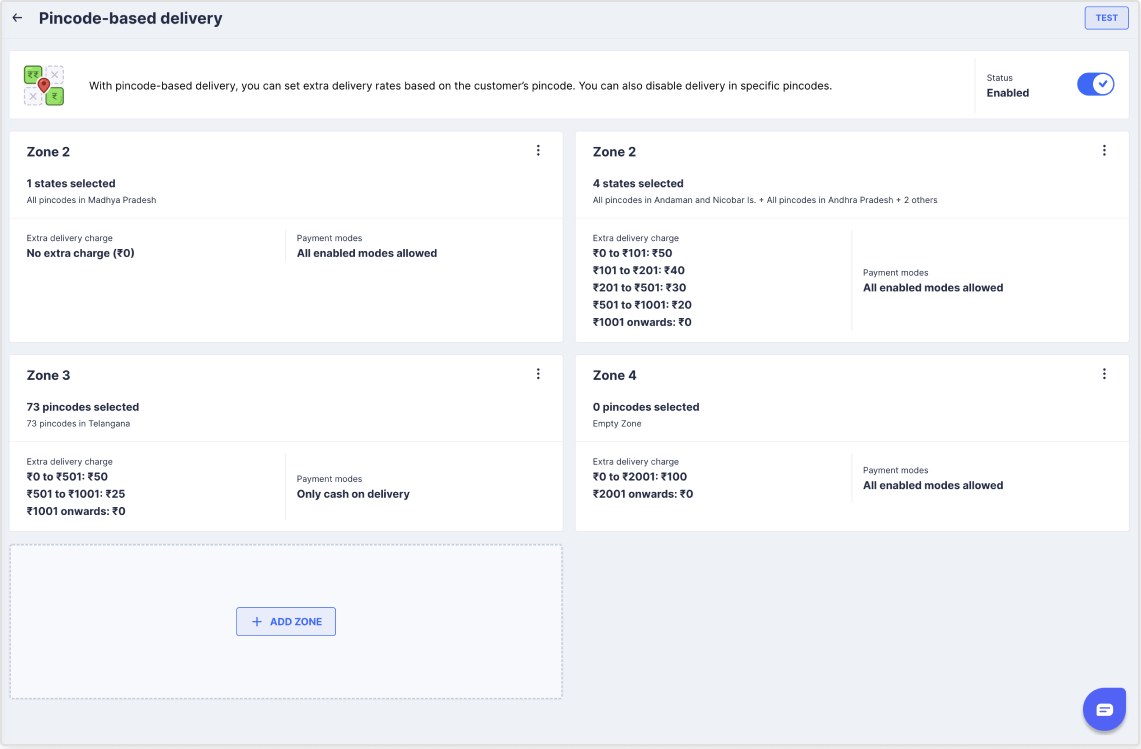
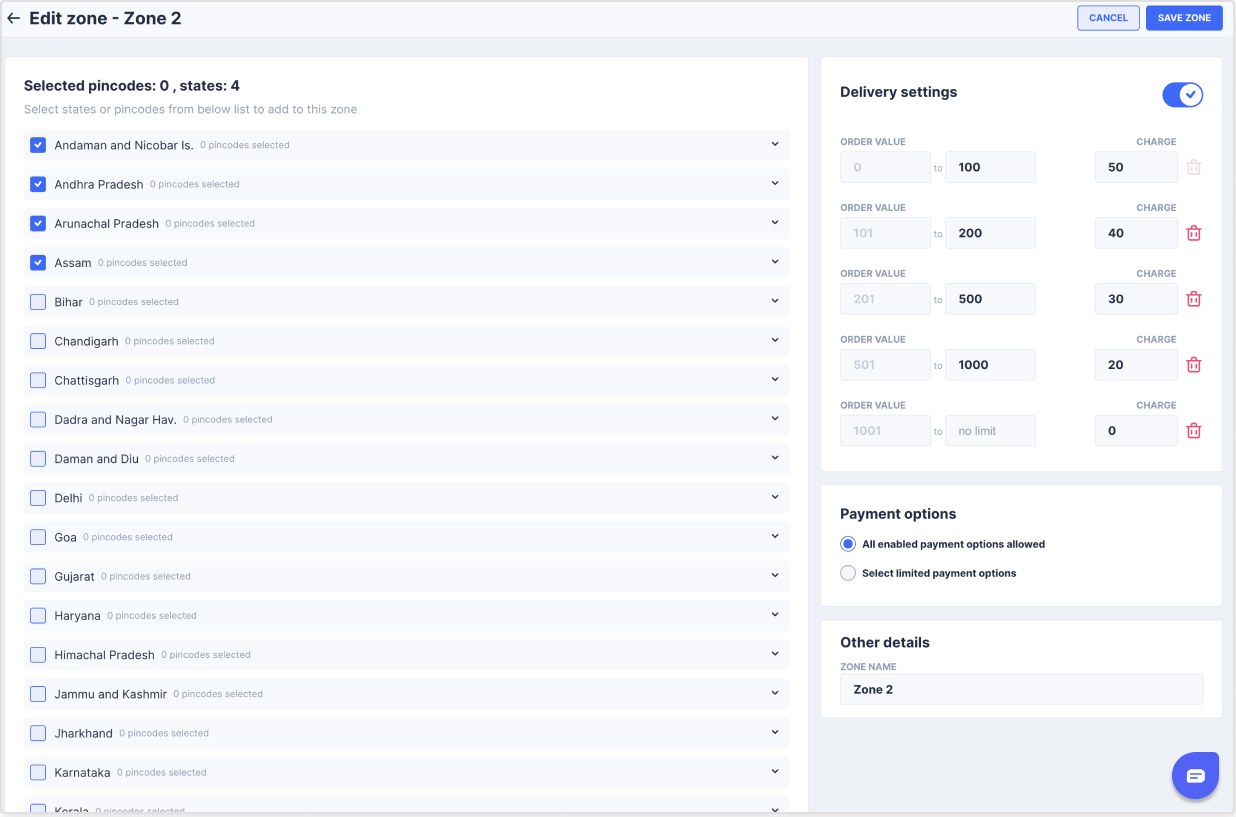
Turning on a mode on one device silently disabled the other, so merchants couldn't tell which rates were live
02 · Analyse
Analysing competitor shipping models

Wix
- Free
- Flat
- Weight
- Order value
- Product
Also Local delivery by radius or postal code, and local pickup

WooCommerce
- Free
- Flat
- Local pickup
Also Free and flat rates can vary by product shipping class

Shopify
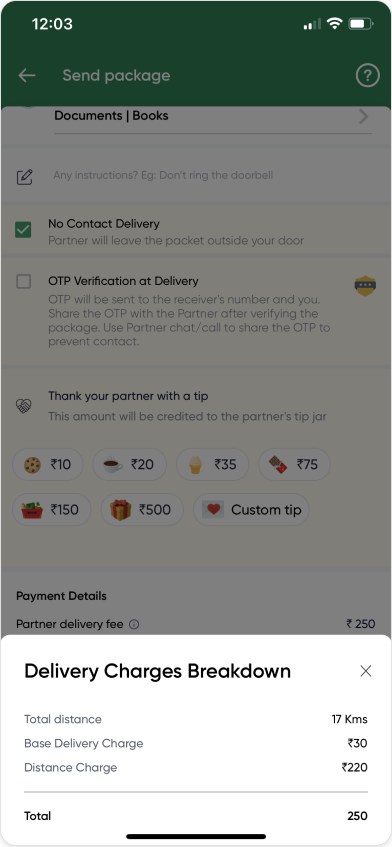
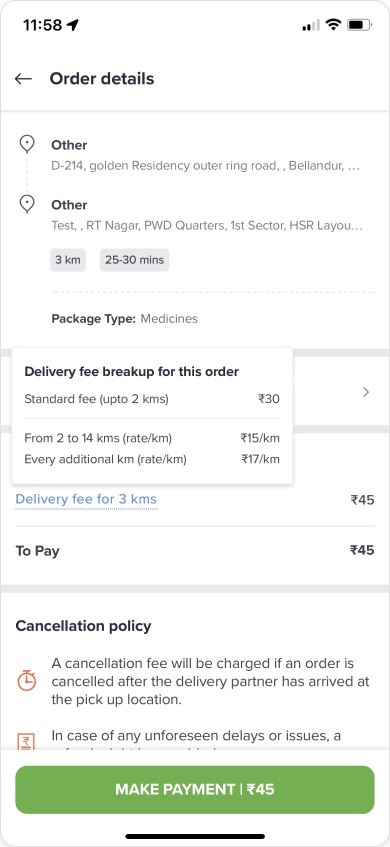
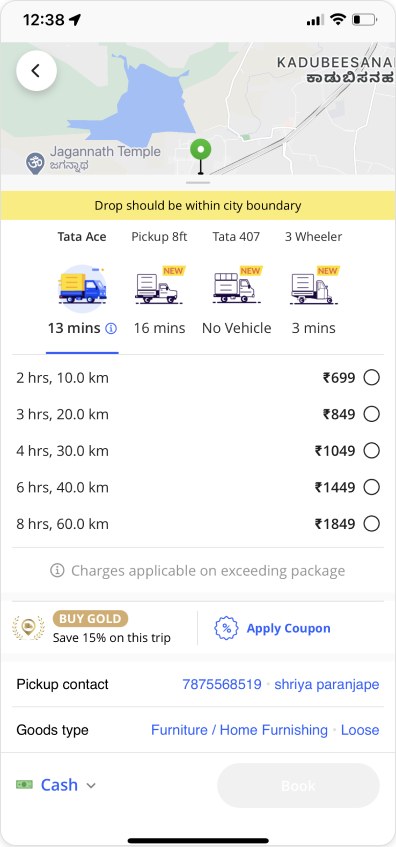
Delivery charges of commonly used apps
03 · Prioritize
Why build a calculator for hyperlocal delivery?
Many of our SMB merchants delivered locally, with their own fleet or services like Dunzo. But pin-codes aren't evenly spread, so a nearby address could cost more than a distant one, and order weight was never factored in
Scope
A cohesive shipping calculator with two major delivery options
PAN India deliveries
Pin-code based
Rates are set per zone of pin-codes, cities or states
Hyperlocal deliveries
Distance based, in kms
Rates follow the distance from the merchant's store
- Free shipping
- Flat shipping
- Order weight based
- Order value based
- Product based · v2
Constraints
Building on the existing pin-code model instead of disrupting it
Release cycles were usually very short, so to optimise effort and bandwidth we built hyperlocal delivery on top of the pre-existing pin-code based model, making sure the same backend structures could be reused
User flow
- Create new zone
- Define delivery area Select pin-codes, cities or states
- Select type of delivery
-
- Courier delivery Pin-code based shipping
-
- Free delivery
- Flat delivery, charged per order
- Order value based, in slabs
- Order weight based, in slabs
- Local delivery Distance based shipping
-
- Free delivery
- Flat delivery, charged per order
- Order value based, in slabs or increments
- Order weight based, in slabs or increments
- Add a name and payment modes, then save
High fidelity prototypes
Merchants could finally charge what delivery actually cost them, without workarounds or switching devices. That removed a real reason for SMBs to outgrow Bikayi, and made the platform stickier for the businesses whose margins depend on shipping
What came next
-
01
Shipping partner integrations
To cover every use case around shipping partners, we planned integrations with major partners like Shiprocket and Delhivery
-
02
Product based charges
The other major merchant request, scoped for v2
Thanks for watching
Next project Back to work